What pink noise is
Pink noise has equal energy in every octave rather than at every frequency. Power drops about 3 dB per octave, which happens to match how our ears hear, so it sounds even from low to high instead of bright.
Real-world sounds that come close: steady rainfall, wind through trees, a stream. That's why pink noise reads as natural to a lot of people who find white noise harsh.
Pink, white or brown?
Pink is the middle ground. It masks more of the high-pitched sounds than brown noise does, and it's gentler on the ears than white noise. If you can't decide, start with pink at a low volume and adjust from there.
You may have read about studies that pair pink noise with deep sleep. That research is early and was done with lab equipment timed to brain waves, not a constant sound from a phone, so we don't make claims about it. We just think it sounds nice. The noise colors guide has the details.
Make it yours in the app
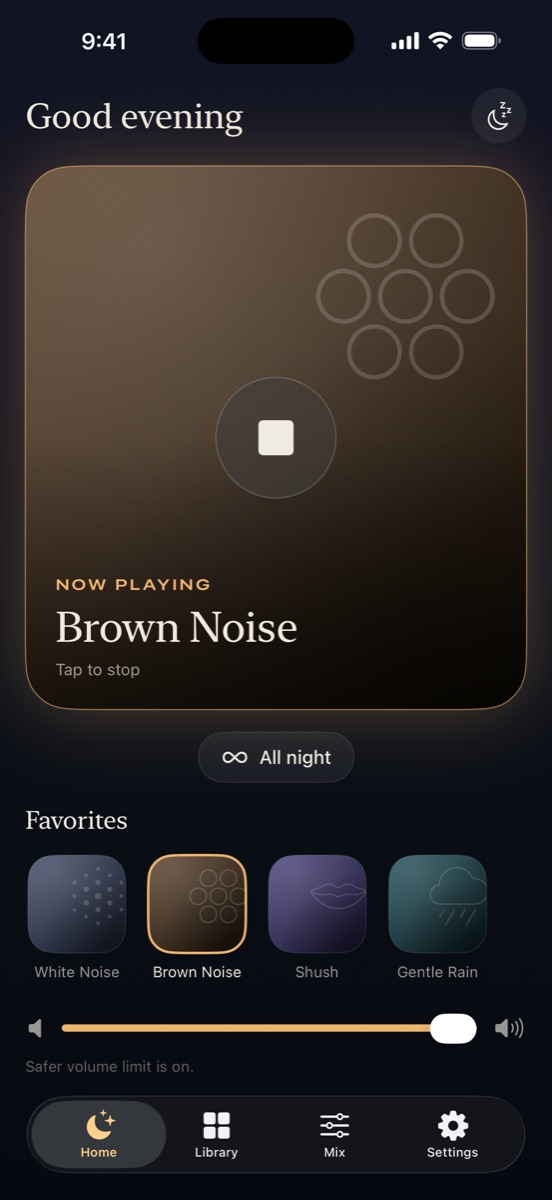
In Sleepy Noise you can layer up to three sounds and set each one's level. Pink noise under gentle rain or ocean waves is a popular mix. Every sound is matched in loudness, so switching between them never jumps in volume.
Pink noise for studying and focus
Pink noise is a good all-day focus sound: it covers voices better than brown noise without white noise's sharpness. Keep it quiet and steady, and try it for a few real study sessions before deciding. More in the studying and focus guide.
Frequently asked questions
Does pink noise help you sleep?
Many people find pink noise relaxing and good at covering background noise. Research on pink noise and deep sleep is still early, so treat it as a preference rather than a treatment.
What does pink noise sound like?
Like steady rain or a waterfall at a distance: fuller and lower than white noise, brighter than brown noise.