How to sleep during the day after night shifts and long nights
To sleep during the day, make your bedroom as close to night as you can. Block the light with blackout shades or an eye mask, cover daytime noise with a steady sound like a fan or brown noise, keep the room cool, and put your phone on Do Not Disturb. Daytime sleep tends to be lighter, so small noises wake you more easily.
That applies to nurses coming off a 12-hour shift, new parents grabbing a nap after a rough night, and anyone else whose bedtime lands at 9 a.m.
Why is it so hard to sleep during the day?
Your body clock expects to be awake when it's light, and the world around you agrees. NIOSH's training for nurses on shift work notes that night workers often get less sleep and poorer-quality sleep than day workers (NIOSH), and it puts the noise problem plainly: sleep during the day tends to be lighter than sleep at night, so noises can be more disturbing.
So daytime sleep starts at a disadvantage on two fronts at once. You're sleeping lighter, in the loudest hours of the day. Everything below is about closing that gap.
Make the room dark
Light is the loudest signal to your body that it's time to be up. NIOSH's advice for night-shift nurses is to make the bedroom very dark, or wear an eye mask if you can't.
- Blackout shades or heavy lined drapes on the bedroom windows. NIOSH suggests the bathroom too, and the path between them, so a mid-sleep trip doesn't flood you with daylight.
- Seal the gap under the door with a draft stopper or a rolled towel.
- Use an eye mask if the room can't get fully dark, or as a backup on bright days.
- Use a dim red night light if you need to get up, rather than the overhead light.
- Cover the small glows: chargers, smoke alarms, a TV standby light. If the phone stays on the nightstand, Sleepy Noise's pure-black night screen keeps it from lighting the room.
Morning light on the way home counts too. NIOSH mentions that some researchers recommend dark sunglasses for the commute home after a night shift, with a serious caveat: if you're very sleepy, sunglasses can block light's alerting effect, so it advises using them only if someone else is driving.
Handle daytime noise
Night has a quiet floor. Day doesn't. Lawn mowers, leaf blowers, delivery drivers and the doorbell, trash trucks, dogs reacting to all of the above, kids home from school, and a neighbor's renovation that starts at 8 sharp.
NIOSH suggests earplugs or a sound-masking device, such as a fan or white noise machine, to camouflage other noises. It also suggests asking the people you live with to keep noise away from the bedroom while you sleep, and keeping pets out.
Why steady sound beats silence that breaks
A quiet room isn't quiet for long during the day. It's silence, then a mower starts, then silence, then the doorbell. Each change is what pulls a light sleeper up.
A small sleep lab study tested this with recorded hospital noise. The noise raised arousals from about 13 an hour to 48, but when steady white noise played underneath it, arousals stayed close to normal. The authors concluded that the size of the jump from background to peak, not the loudest moment, decided whether someone woke (Stanchina et al. 2005, Sleep Medicine). It was four or five people in a lab, so it's a clue rather than proof, but it's the reason masking works at all: steady sound raises the floor so the spikes stick out less.
That also means the sound should keep playing until you wake. A masker that stops at noon leaves you exposed for the rest of the afternoon.
Which sound for which daytime noise?
| Daytime noise | What it's like | Sound to try first |
|---|---|---|
| Lawn mowers, trucks, construction | Low rumble and engine drone | Brown noise |
| Kids, voices, TV through the wall | Mid and higher pitched, changing | Pink noise or a fan |
| Doorbell, dog barks, phone buzz | Short, sharp spikes | A fan or pink noise, plus earplugs |
| A mix of everything | All of the above | Rain, or brown noise under a fan |
Brown noise puts most of its energy low, which suits engines and rumble. Pink noise and fans spread wider and sit better over voices. Rain is close to pink noise with texture, and many people find it the easiest to listen to for hours. Start low and raise it only until the outside noise stops grabbing your attention. If you'd have to raise your voice to talk over it, it's too loud.
For the doorbell itself, a "Day sleeper, please knock later" note or a delivery instruction saves more sleep than any sound will.
Keep it cool
Bedrooms heat up in the afternoon, especially with sun on the windows. NIOSH suggests a cool bedroom with extra covers for warmth, and notes that people's preferences vary, so the right temperature is the one where you're comfortable rather than too warm. Blackout drapes keep some of the sun off. A real fan does double duty: it cools you and its hum covers some noise.
Put your phone on Do Not Disturb
A buzz at 11 a.m. can end a sleep that took an hour to start. NIOSH suggests setting the phone so it won't disturb you, customizing Do Not Disturb so emergency calls from chosen people can still get through, and turning off social media and other nonessential alerts.
On iPhone that's a Sleep or Do Not Disturb Focus with allowed contacts; Android's Do Not Disturb works the same way with starred contacts. Set it to turn on automatically at your usual daytime bedtime so you don't have to remember at the end of a shift. If a call you've allowed does come through, Sleepy Noise pauses for it and fades back in afterward.
Build a daytime routine
NIOSH's guidance for night-shift nurses comes down to protecting the sleep window (NIOSH):
- Go to bed soon after your shift. If you're hungry, NIOSH suggests a small meal with some protein and carbohydrate rather than a big one.
- Don't fill the early morning with errands. That's prime sleep time after a night shift.
- Sleep as long as you can, since night workers tend to come up short.
- Nap before returning to work if you can fit it in.
- Tell the people you live with when you sleep and what helps. NIOSH has a whole module on getting family and friends on board, including taking on less childcare and fewer errands in the mornings.
A short wind-down helps too: same few steps, same order, every time. Shower, shades down, phone on Do Not Disturb, sound on, mask on. Your brain learns the cue even when the sun is up.
For new parents napping during the day
The same rules apply, with one change: you still need to hear the baby, or whoever is on duty does. Skip earplugs if you're the one listening. Keep any masking sound low enough that a cry or the baby monitor still carries, and put the monitor closer to you than the noise source. Take the nap the moment someone else has the baby, rather than doing dishes first.
When to talk to a doctor
If daytime sleep stays short or broken for weeks despite a dark, quiet, cool room, or you're struggling to stay awake at work or on the drive home, talk to a doctor. Persistent sleep trouble around shift work is a recognized problem, and a clinician can help with options beyond the bedroom setup.
Where Sleepy Noise fits
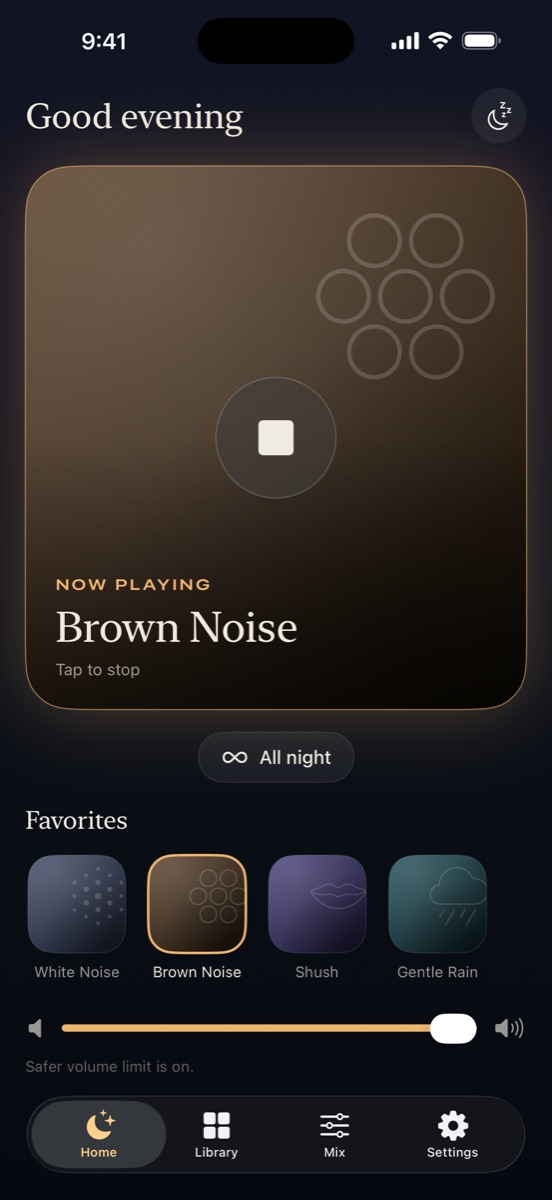
We make Sleepy Noise, so take this with that in mind. The app plays a steady sound until you stop it, so the masking doesn't quit halfway through your sleep, and timers fade out if you only want it for a nap. Brown, Pink, Box Fan and Gentle Rain are among the 12 free sounds, and the mixer lets you layer up to three, such as brown noise under rain. A Home Screen widget or Siri starts it without opening the app, and a pure-black night screen keeps the room dark. No ads, so nothing loud cuts in at noon. It doesn't do the shades, the phone settings or the conversation with the neighbor's leaf blower.
Frequently asked questions
How can I sleep during the day with all the noise?
Play a steady sound like a fan, brown noise or rain for the whole sleep, add earplugs if you don't need to hear anyone, and ask the household to keep noise away from the bedroom. Steady sound makes the sudden noises stand out less.
Is white noise or brown noise better for sleeping during the day?
Brown noise covers low daytime sounds like mowers and trucks better, while white or pink noise and fans sit better over voices and kids. Many day sleepers mix brown noise with a fan or rain.
How do night shift workers sleep during the day?
The usual approach is a very dark room or an eye mask, earplugs or a sound machine, a cool room, a silenced phone, going to bed soon after the shift, and a household that protects the sleep window. NIOSH's training for nurses covers each of these.
Why is daytime sleep lighter than night sleep?
Your body clock is set for being awake in daylight, and NIOSH notes that daytime sleep tends to be lighter than night sleep, so noises are more likely to wake you.
Should I wear sunglasses home after a night shift?
Some researchers recommend it to limit morning light before sleep, but NIOSH warns that sunglasses can make a sleepy drive more dangerous. Wear them only if someone else is driving.